
Planting
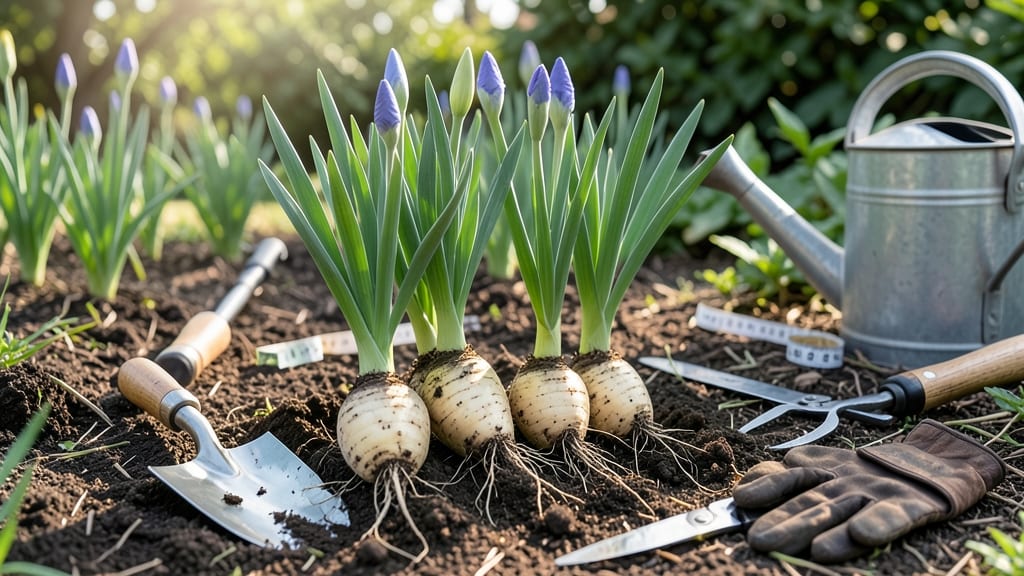
Transplanting iris bulbs in spring is best done after blooming—between March and May in most climates—using well-draining soil and partial sunlight to minimize stress and promote strong root development. Remember to divide overcrowded clumps every 3-4 years.
Timing is everything when moving iris bulbs, as they need time to establish roots before summer heat sets in. 🌱 The key is waiting until foliage yellows naturally—this signals the plant has stored enough energy for transplant shock recovery.
I always test soil moisture before digging; damp but not soggy soil helps prevent root damage during the move.
For soil prep, focus on creating a loose, airy mix that mimics their native rocky conditions. A blend of 50% garden soil, 30% coarse sand, and 20% compost works wonders for drainage while retaining essential nutrients.
Raised beds are perfect for problem areas with heavy clay, as they prevent waterlogging that can rot delicate rhizomes.
💡 In This Article
- Best Spring Months for Iris Transplanting by Climate Zone
- Soil and Site Preparation for Healthy Iris Bulbs
Best spring months for iris transplanting by climate zone
Iris bulbs follow a natural dormancy cycle that makes timing critical. The ideal window is after blooming but before summer heat—when soil temperatures reach 55-65°F, signaling active root growth without stress.
In colder zones (USDA 3-5), aim for late April to early May when frost risk drops below 20% and daytime highs consistently exceed 60°F. This timing ensures roots establish before summer dormancy kicks in.
Warmer climates (USDA 7-10) have more flexibility, with March to early April being perfect. Here, the key is avoiding the hottest months—transplanting in May risks heat shock, as iris rhizomes need 6-8 weeks to adapt before summer's intensity.
Early bloomers (like Iris germanica) can be moved 4-6 weeks after flowering, while late varieties (such as Iris sibirica) wait until foliage yellows naturally.
Soil temperature is the hidden factor most gardeners miss. Use a soil thermometer to confirm 55°F+ readings at 4-inch depth—this triggers root regrowth. In my zone 6 garden, I’ve seen transplants fail when moved too early, with rhizomes rotting in cold, damp soil.
The 60-day rule applies: count back from your first frost date to determine the latest safe transplant window.
Adjust for microclimates too—south-facing slopes warm faster than shaded areas. I once transplanted a clump in a north-facing bed in early May, only to watch it struggle until late June. The solution? Test soil moisture daily—if it stays damp for 3+ days, delay transplanting until conditions dry out.
For container-grown irises, timing shifts slightly. These adapt faster but still need 60°F+ soil. I’ve successfully moved potted irises in late April by pre-soaking roots for 2 hours before planting, which jumpstarts hydration. The secret? Their roots are less sensitive to temperature changes than ground-planted rhizomes.
Watch for these signs of poor timing: wilting foliage within 7-10 days or yellowing leaves before new growth appears. These indicate transplant shock from either too-early or too-late moves. 🌱