
Planting
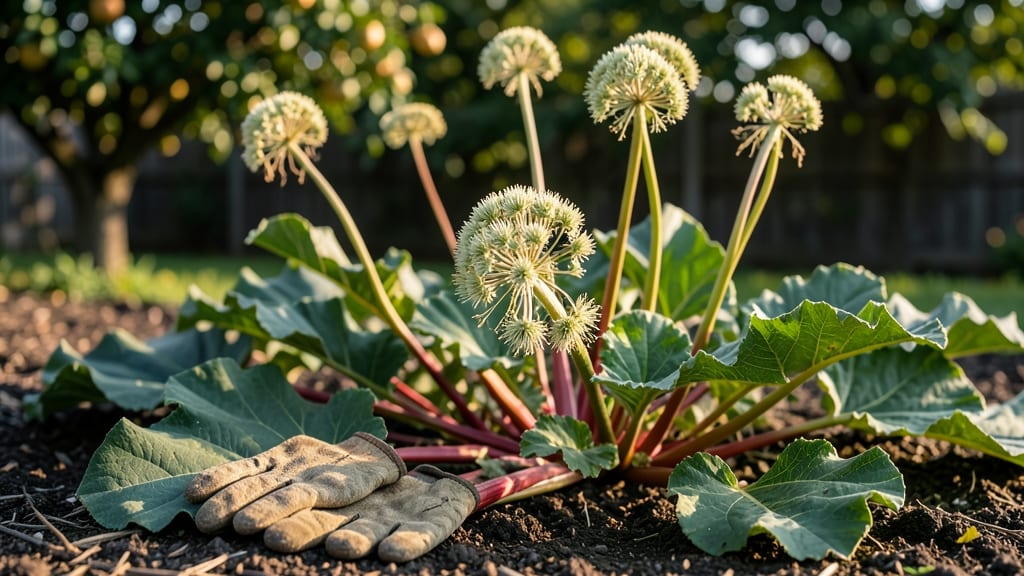
When your rhubarb plant goes to seed, it’s not just a setback—it’s a clear signal your plant needs a reset. 🌱 I’ve had my share of seed stalks ruining harvests, and the secret to stopping them lies in understanding why they appear and how to nip them in the bud before they take over.
The problem starts when rhubarb senses it’s time to reproduce, sending up those tall, unmistakable flower stalks that steal energy from your stalks. Most gardeners don’t realize these stalks can appear even in young plants if stressed—whether from overcrowding, poor soil, or inconsistent watering.
The good news? Removing them early keeps your plant focused on producing those sweet, tart stalks you love.
Once you start cutting those seed stalks at the base, you’ll notice a difference within weeks—thicker, more vibrant growth returning to your rhubarb.
The key is consistency: check for stalks every few days during spring’s peak growth, and your plant will reward you with a harvest that lasts well into summer.
This method works for both first-year plants and mature rhubarb, though older plants sometimes need extra care. With the right approach, you can turn a struggling plant into a productive one—no forcing tricks required, just smart maintenance.
The Triggers Behind Bolting
When your rhubarb plant suddenly sends up flower stalks and goes to seed, it’s not just a sign of age—it’s a response to specific environmental and biological cues.
Understanding these triggers can help you prevent premature bolting and keep your plant focused on leafy growth (and those delicious stalks). Here’s why it happens:
Rhubarb (Rheum rhabarbarum) is a cool-weather crop, and when temperatures rise unexpectedly, it can send the plant into survival mode. Here’s how heat triggers bolting:
- Extended Warmth: Rhubarb enters dormancy in summer (especially in hot climates) and may bolt if daytime temperatures consistently exceed 75°F (24°C) for weeks. This mimics its natural lifecycle in colder regions, where it flowers after a long winter.
- Rapid Temperature Shifts: Sudden heatwaves after a cool spring can confuse the plant’s internal clock, prompting it to flower prematurely. Rhubarb relies on vernalization (a cold period) to delay flowering, but inconsistent temperatures disrupt this process.
- Nighttime Heat: If nighttime temps stay above 60°F (15°C), the plant may interpret this as a signal to reproduce, even if days are still cool. This is common in Mediterranean or desert climates where summers are long and hot.
Actionable Fix: If you’re in a warm climate, plant rhubarb in partial shade (30–50% sunlight) to reduce stress. Mulch heavily with straw or wood chips to keep roots cool.
Like many perennials, rhubarb has a biological clock. After 3–5 years, it may bolt as a natural part of its lifecycle, but younger plants can also react to stress that mimics aging. Here’s why:
- Depleted Energy Reserves: Older plants have weaker root systems and may bolt to conserve energy before dying back. Younger plants, however, can bolt if they’re overcrowded or nutrient-deficient, as the plant prioritizes reproduction over growth.
- Root Competition: If your rhubarb crown is divided too frequently or planted too closely, the plant may bolt to spread seeds before resources become scarce. Rhubarb crowns should be 12–18 inches apart to avoid stress.
- Floral Hormones: As the plant matures, it produces more florigen (a flowering hormone) in response to stress. Even a slightly stressed young plant can trigger this response if it senses limited resources.
Actionable Fix: Replace old crowns every 4–5 years to prevent exhaustion. For young plants, ensure they have rich, well-draining soil and consistent watering to delay bolting.
Rhubarb is surprisingly drought-tolerant, but fluctuations in water and nutrients can send it into bolting mode. Here’s how:
| Trigger | Why It Causes Bolting | Signs to Watch For |
|---|---|---|
| Drought Stress | When soil dries out completely, the plant perceives this as a signal to reproduce before dying. Rhubarb stores water in its stalks, but prolonged dryness forces it to prioritize seeds. | Wilting leaves, crispy leaf edges, flower stalks emerging from the center |
| Overwatering | Soggy soil leads to root rot and oxygen deprivation, which stresses the plant. In response, it may bolt to produce seeds before succumbing to disease. | Yellowing leaves, mushy crown, moldy soil, flower stalks in wet weather |
| Nitrogen Deficiency | Rhubarb needs high nitrogen for leafy growth. When nitrogen is low, the plant shifts to reproductive mode to ensure survival. A soil test can confirm this. | Pale green or yellow leaves, stunted growth, flower stalks appearing early |
| Phosphorus Imbalance | Too much phosphorus (common in synthetic fertilizers) can suppress root growth and trigger early flowering. Rhubarb prefers a balanced 3-4-6 NPK ratio (nitrogen-phosphorus-potassium). | Purple-tinged leaves, weak stalks, premature flower stalks |
Actionable Fix:
- Water deeply 1–2 times per week (1–1.5 inches per session) and mulch to retain moisture.
- Fertilize in early spring with a low-phosphorus, high-nitrogen formula (e.g., 5-5-5 or compost tea). Avoid high-phosphorus fertilizers like bone meal.
- Test soil pH—rhubarb thrives in slightly acidic to neutral soil (pH 6.0–7.0).
Rhubarb is a heavy feeder and hates competition. When its roots are restricted or overworked, it may bolt as a last-ditch effort to propagate. Here’s how crowding triggers the issue:
- Over-Divided Crowns: If you divide rhubarb too often (e.g., every year), the remaining crowns become root-bound and stressed. A healthy rhubarb plant should only be divided every 3–4 years.
- Competing Plants: Weeds or neighboring perennials stealing nutrients and water can force rhubarb to bolt. Rhubarb needs full sun and open space to thrive.
- Small Planting Holes: If the crown is planted too shallowly (less than 2 inches deep), roots struggle to access moisture and nutrients, triggering stress responses.
Actionable Fix:
- Give each crown 18+ inches of space in all directions.
- Divide only when necessary—look for multiple stalks emerging from one crown as a sign it’s ready.
- Remove weeds within a 2-foot radius of the plant to reduce competition.
By addressing these triggers—whether it’s heat stress, age, water issues, or crowding—you can keep your rhubarb focused on leafy growth and delay (or even prevent) bolting. The key is consistency: cool temps, rich soil, and space are your best tools for a productive rhubarb patch.
Reviving Your Rhubarb’s Productivity
When your rhubarb plant goes to seed, it’s not the end of the world—just a sign it’s time to take action! With the right steps, you can coax it back into producing those luscious, tart stalks you love.
Below, we’ll tackle the most common causes and provide practical, step-by-step solutions to restore your plant’s vigor. Plus, we’ll share prevention tips to keep future harvests abundant.
If your rhubarb has been in the ground for 5+ years, it may have simply outgrown its prime. Older plants often shift energy into seed production instead of stalks.
How to Fix It
- 🔪 Divide the Crown
- In early spring (before new growth starts), carefully dig up the plant.
- Use a sharp knife to separate the crown into smaller sections, ensuring each has at least one healthy bud.
- Replant the divisions 12–18 inches apart in fresh soil.
- 🌱 Rejuvenate with Fertilizer
- After replanting, feed with a balanced fertilizer (10-10-10) to encourage new growth.
- Water deeply to help roots establish.
- 📅 Limit Harvests for 1–2 Years
- Avoid cutting stalks for the first year to let the plant recover.
- In the second year, harvest sparingly (no more than ⅓ of the stalks).
💡 Prevention Tip
- Replace old plants every 5–6 years—rhubarb’s productivity declines as it ages. Start fresh with divisions or young plants to maintain yield.
Rhubarb thrives in full sun (6+ hours daily) and well-draining soil. If it’s shaded or overcrowded, it may bolt (go to seed) prematurely.
How to Fix It
- ☀️ Move to a Sunnier Spot
- Relocate the plant to an area with direct sunlight (even partial shade can reduce stalk production).
- If moving isn’t an option, thin nearby plants to reduce competition.
- 🪴 Improve Soil Drainage
- Amend heavy or clay soil with compost or sand to prevent waterlogging.
- Avoid soggy conditions—rhubarb hates "wet feet."
- 📏 Space Out Plants
- Rhubarb needs 3 feet of diameter per plant. If crowded, divide and replant sections.
💡 Prevention Tip
- Plant in full sun from the start, and avoid mulching too heavily—rhubarb prefers cooler roots.
Extreme heat or drought can shock rhubarb into bolting as a survival mechanism.
How to Fix It
- 💧 Water Deeply and Consistently
- Keep soil moist but not soggy, especially during hot, dry spells.
- Mulch with straw (not wood chips) to retain moisture and cool roots.
- 🌿 Provide Afternoon Shade (If Needed)
- In Zone 7+, rhubarb may struggle in scorching afternoons.
- Use light shade cloth temporarily to reduce stress.
- 🍃 Trim Bolting Stalks Immediately
- If you spot flower stalks, snip them off at the base to redirect energy to leaf growth.
- Repeat weekly until no more bolts appear.
💡 Prevention Tip
- Water deeply 1–2 times per week (more in extreme heat).
- Harvest in early spring before temperatures rise—this reduces stress.
Lack of key nutrients (like phosphorus or potassium) can weaken rhubarb, making it prone to bolting.
How to Fix It
- 🌿 Apply a Balanced Fertilizer
- Use a low-nitrogen, high-phosphorus fertilizer (e.g., 5-10-10) in early spring.
- Follow up with potassium-rich compost in early summer.
- 🍎 Boost Organic Matter
- Mix well-rotted manure or compost into the soil before replanting.
- Avoid fresh manure—it can burn roots.
- 💧 Flush Soil with Water
- If soil is too alkaline (pH > 6.5), amend with peat moss or sulfur to lower pH slightly.
💡 Prevention Tip
- Test soil annually—rhubarb prefers pH 6.0–6.5. Adjust as needed.
Planting rhubarb too late in the season can confuse it, leading to premature bolting.
How to Fix It
- 🌱 Plant in Early Spring or Fall
- Best time: March–April (before new growth starts) or September–October (for fall root establishment).
- If you missed the window, wait until next spring—don’t plant in summer heat.
- 🌿 Use Young Plants, Not Seeds
- Rhubarb grown from seed takes 2+ years to produce stalks—buy established plants instead.
💡 Prevention Tip
- Mark your calendar—rhubarb is a perennial, so proper timing upfront saves future headaches.
Reviving a rhubarb plant that’s gone to seed takes time and care, but with these steps, you’ll be back to harvesting plump, tangy stalks in no time. Prevention is key—once you reset your plant, give it the right conditions (sun, space, nutrients) to thrive for years.
Now, grab your pruners and get to work—your future rhubarb pies will thank you! 🍰🔥
Frequently asked questions
Why does my young rhubarb plant go to seed when it's only 1-2 years old?
Young rhubarb plants bolt prematurely due to stress from overcrowding, poor soil, or temperature fluctuations. Even first-year plants can react to heatwaves above 75°F (24°C) or sudden drought by sending up flower stalks. The plant prioritizes reproduction when it senses limited resources or environmental instability. Check for 12+ inches of spacing between plants and ensure consistent moisture.
Can I still harvest rhubarb stalks after it goes to seed?
Yes, but focus on smaller, younger stalks near the center of the plant. Once flower stalks appear, the plant redirects energy upward, making remaining stalks thinner and less sweet. Harvest sparingly (no more than ⅓ of the plant) to avoid further stress. Remove all flower stalks at the base immediately to encourage leafy regrowth.
Will cutting off flower stalks permanently stop my rhubarb from going to seed?
No, but it delays bolting for 1-2 seasons. Cutting stalks redirects energy to leaf production, but the plant's biological clock still triggers flowering after 3-5 years. For long-term prevention, combine this with proper spacing, cool-season care, and annual soil amendments. Older plants (>5 years) may need division to rejuvenate.
Does forcing rhubarb (covering with buckets) prevent it from going to seed?
Forcing extends the harvest season but doesn't prevent bolting. The technique keeps stalks tender by blocking light, but heat stress from summer still triggers flower stalks. For seed prevention, focus on early spring harvests (before 60°F (15°C) nights) and removing flower stalks weekly. Forcing works best in cool climates (Zones 3-5) where summer heat is minimal.
Can I save seeds from my rhubarb plant for next year?
While technically possible, rhubarb seeds from homegrown plants won't produce true-to-type stalks. The resulting seedlings may have bitter leaves or weaker growth. For reliable harvests, stick to crown divisions from established plants. If you want to experiment, collect seeds from mature flower heads, dry them, and plant in early spring—but expect variable results.