
Plants
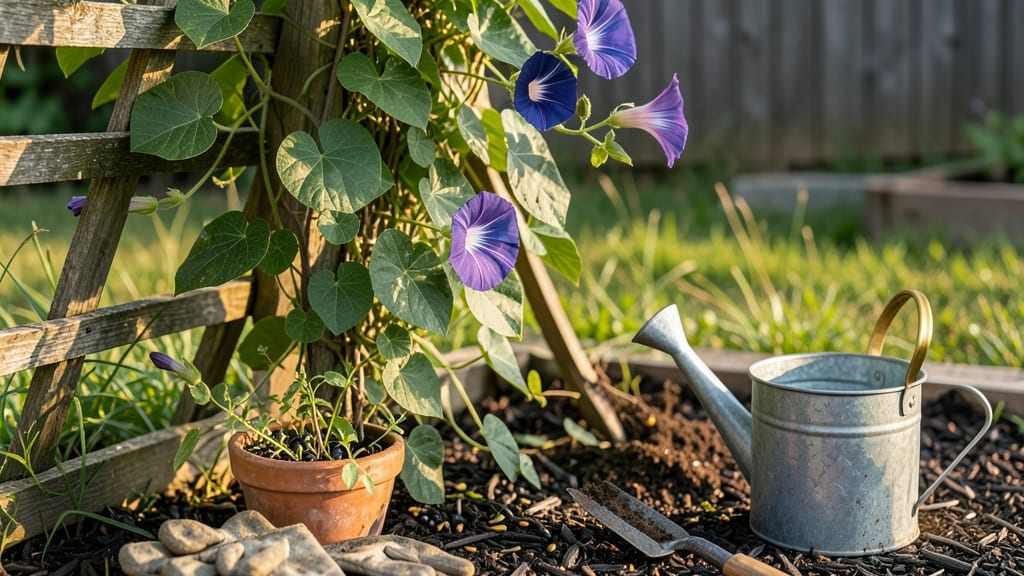
The best place to plant morning glories is in a sunny spot with at least 6-8 hours of direct sunlight daily, well-draining soil, and a sturdy trellis or fence for climbing. Plant them in spring after the last frost, spacing seeds 6-12 inches apart for optimal growth and vibrant blooms.
The ideal location for morning glories combines three key factors: sunlight, soil quality, and vertical support. 🌞 These plants crave bright light to fuel their rapid growth and prolific flowering, so south-facing walls or open garden beds work best.
The soil should drain quickly to prevent soggy roots, which can lead to rot—amending heavy clay with compost helps.
I've found that planting near a sturdy fence or trellis not only gives the vines something to climb but also creates a stunning vertical display that transforms any garden corner into a living work of art.
For cooler climates, microclimates matter—south-facing slopes or areas protected from wind can extend the growing season. Morning glories are annuals in most regions, so you'll replant each spring, but choosing the right spot ensures they'll reward you with months of vibrant blooms.
The key is balancing sun exposure with adequate support—the vines can grow up to 10 feet in a single season!
💡 In This Article
- Morning Glory Sunlight and Soil Requirements
- Choosing the Right Support Structure for Morning Glories
Morning glory sunlight and soil requirements
Morning glories demand 6-8 hours of direct sunlight daily to thrive, as their rapid growth and vibrant blooms rely on photosynthesis efficiency.
Without sufficient light, vines grow leggy and produce fewer flowers. 🌞 The ideal location receives morning sun (when flowers open) and afternoon light—think south-facing walls or open garden beds.
In cooler climates, microclimates like south-facing slopes or wind-protected areas can extend the growing season by 1-2 weeks before the last frost.
The soil pH should range from 6.0 to 7.0—slightly acidic to neutral—for optimal nutrient uptake. These plants prefer well-draining soil to prevent root rot, which occurs when roots sit in soggy conditions for more than 24 hours.
Amend heavy clay soil with 2-3 inches of compost or coarse sand to improve drainage. I've noticed that morning glories in sandy loam soil (60% mineral, 30% organic matter) produce the most vigorous growth compared to dense clay.
Drainage is critical because morning glories have shallow root systems that spread horizontally rather than deeply. The key is to mimic their natural habitat—moist but never waterlogged. In containers, use a mix of 50% potting soil and 50% perlite to ensure excess water drains quickly.
Overwatering causes yellowing leaves and stunted blooms, while consistent moisture (about 1 inch per week) encourages robust vine development.
For cooler regions, consider planting near heat-absorbing surfaces like brick walls or dark mulch, which can raise soil temperatures by 5-10°F and create a warmer microclimate. Morning glories are frost-sensitive, so wait until soil temperatures reach 55°F before sowing seeds.
In zones 3-5, start seeds indoors 4-6 weeks before the last frost to give them a head start.
Another pro tip: Avoid planting morning glories in low-lying areas where cold air pools, as even a light frost (32°F) can damage emerging seedlings. The vines themselves are tender and die back with frost, but the seeds often resprout if planted in spring.
This resilience makes them perfect for annual gardeners who want quick, colorful results without perennial commitment.
Finally, morning glories respond well to organic matter like well-rotted manure or composted leaves, which improve soil structure and provide slow-release nutrients.
The vines can grow 5-10 feet in a single season, so enriching the soil beforehand ensures they have the energy to produce abundant blooms throughout summer and early fall.