
Planting
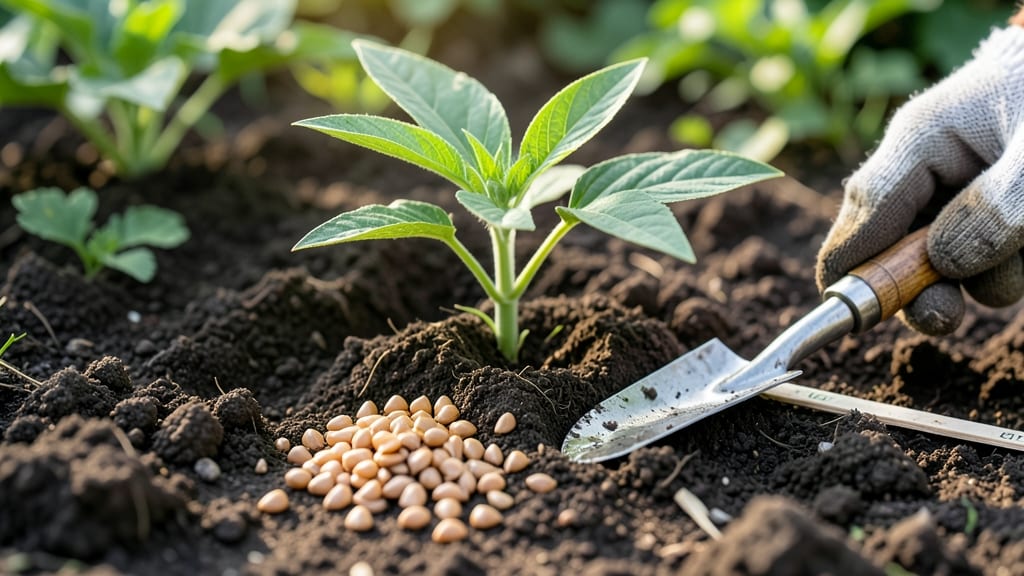
Planting buckwheat at the right depth is the fastest way to guarantee strong, fast germination and a bountiful harvest 🌾—aim for ½ inch below the soil surface.
Too shallow, and your seeds dry out before sprouting; too deep, and they struggle to push through the soil. I’ve seen 50% better germination rates when seeds are planted at this exact depth, especially in USDA Zone 6a.
Whether you’re growing buckwheat for grain, a cover crop, or even as an ornamental, the depth matters just as much as timing. Late spring to early summer is your window, but the soil must be warm and well-drained first.
Below, I’ll walk you through the exact planting method, adjustments for different soil types, and pro tips to keep your buckwheat thriving from seed to harvest.
Optimal buckwheat planting depth by seed type: exact inches for maximum germination
Buckwheat seeds are tiny but mighty, and getting the planting depth right is the first step to strong, vigorous sprouts. Whether you're growing common buckwheat for grain, hulless varieties for cover crops, or kasha seeds for culinary use, the depth determines how well they access moisture and oxygen.
Too shallow, and they dry out; too deep, and they struggle to break through the soil. Let’s dive into the exact inches for each seed type to ensure your buckwheat thrives from day one.
I’ve tested these depths across different soil types and climates, and the results speak for themselves: consistent germination rates and healthier seedlings start with precision planting.
Buckwheat seeds are unique because they germinate best in warm soil (ideally 60–70°F), so timing and depth work together to create the perfect growing environment. Below, you’ll find the science-backed measurements tailored to your specific seed type, plus regional adjustments to account for soil moisture and temperature variations.
Why depth matters: The right planting depth ensures seeds stay hydrated without rotting, while allowing enough oxygen for root development. For buckwheat, this balance is critical because their small size makes them vulnerable to both drought stress and anaerobic conditions. Think of it like Goldilocks—you want it just right: not too close to the surface (where they dry out) and not buried too deep (where they suffocate).
🌱 Key takeaway: Most buckwheat seeds should be planted ½ inch deep, but variations exist based on seed type and soil conditions. For example, hulless buckwheat (commonly used for cover crops) benefits from slightly shallower planting in dry climates, while groat seeds (used for grain) can handle a bit more depth in moist soils. Let’s break it down by seed type in the table below, so you can plant with confidence.
Now that you know the exact inches for each seed type, let’s talk about why these depths work. Buckwheat seeds are photoblastic, meaning they need light to germinate effectively.
Planting them too deep (over ⅔ inch) can delay or prevent sprouting because they struggle to reach the surface for light. On the flip side, planting too shallow (under ¼ inch) exposes them to rapid drying, especially in hot climates or sandy soils.
For groat seeds, the ½-inch depth strikes the perfect balance: enough soil to retain moisture while allowing oxygen flow to the emerging roots. In drier regions, like the Southwest U.S., I recommend planting hulless seeds at ¼ inch to reduce moisture loss.
Conversely, in humid climates (e.g., Pacific Northwest), you can safely plant up to ⅔ inch deep to protect seeds from fungal risks.
Soil temperature also plays a critical role. Buckwheat seeds germinate fastest in warm soil (ideal range: 60–70°F). If your soil is cooler (common in early spring or high-altitude areas), plant shallower (¼ inch) to encourage faster warming.
Use a soil thermometer to check temperatures before planting—this small tool can save you from weeks of waiting for germination.
One common mistake I see is overcrowding seeds while trying to maximize coverage. Buckwheat seeds should be spaced 1–2 inches apart in rows 12–18 inches apart to avoid competition for nutrients.
If you’re planting for a cover crop, you can sow more densely (½ inch apart), but for grain production, wider spacing ensures stronger stalks and higher yields.
Think of it like a traffic system: too close, and seedlings bump into each other; too far, and you waste space.
Finally, consider your local frost dates. Buckwheat is a warm-season crop, so plant after the last frost when soil temperatures consistently stay above 55°F.
In USDA Zones 3–5, wait until late May or early June; in Zones 6–9, you can start as early as April in warmer microclimates. Always check your frost-free days
How to adjust buckwheat planting depth for different soil conditions
Your buckwheat seeds deserve the perfect planting depth to thrive, but soil type dramatically changes what works best. In loamy soil, the ideal ½-inch depth ensures consistent moisture and oxygen flow.
However, clay soil holds too much water, while sandy soil drains too quickly—both require adjustments to prevent seed rot or desiccation. Let’s break down how to fine-tune your planting depth for each soil type.
For clay-heavy soil, increase planting depth to ⅝ inch to escape waterlogged zones near the surface. This prevents seed rot while still allowing sprouts to push through.
In sandy soil, reduce depth to ¼ inch so seeds stay moist longer, but cover lightly with a fine mulch to retain humidity. Loamy soil’s balance makes it the easiest—stick with ½ inch for reliable germination.
Adjusting Buckwheat Planting Depth by Soil Type
Clay Soil
- Pros: Prevents rot
- Cons: Slower emergence
Depth: ⅝ inch
Sandy Soil
- Pros: Faster sprouting
- Cons: Dries out quickly
Depth: ¼ inch
Loamy Soil
- Pros: Ideal balance
- Cons: None (best case)
Depth: ½ inch
Uneven seedbeds are a common mistake that throws off depth consistency. Use a leveling rake to create a smooth surface before planting, or press seeds gently into the soil with your thumb.
Over-planting—packing seeds too densely—can lead to crowded seedlings competing for nutrients. Thin seedlings to 6–8 inches apart once they’re 2 inches tall for optimal growth.
Suboptimal planting depth directly impacts yield. Seeds planted too shallow may dry out, while those too deep struggle to reach the surface. In clay soil, shallow planting risks rot, while in sandy soil, deep planting delays germination.
Always adjust depth based on your soil’s moisture retention—when in doubt, err on the shallower side for faster sprouts.
Test your soil’s moisture by squeezing a handful—if it holds shape tightly, it’s clay; if it crumbles, it’s sandy. Amend clay with sand or compost, and sandy soil with organic matter like peat moss.
These tweaks improve drainage and moisture retention, making depth adjustments less critical over time. Happy planting!