
Transplanting
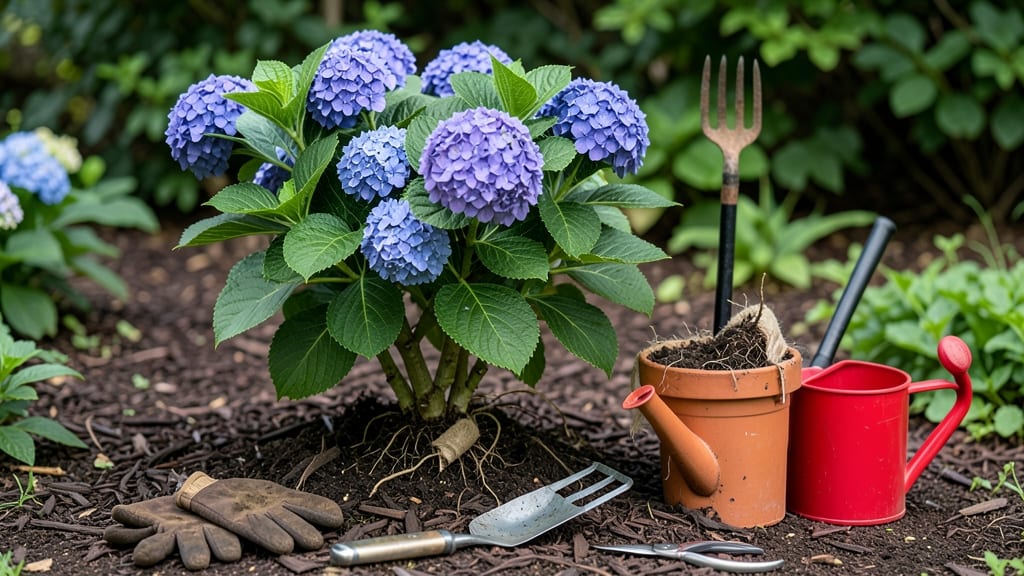
Yes, hydrangeas can be transplanted in the fall, but it requires careful timing and root care: plant 4-6 weeks before your first frost to let roots settle before dormancy, using consistent moisture and proper soil prep to prevent transplant shock. Late fall moves risk frost damage before roots establish.
Timing is everything when moving hydrangeas in autumn—too early and roots won't establish before winter, too late and cold sets in before they adapt. 🌿 The 4-6 week window before frost gives plants critical time to recover, especially for bigleaf varieties that need strong root systems to handle winter dormancy.
I've found that preparing the new site with amended soil and a deep watering schedule makes all the difference in survival rates.
What many gardeners overlook is the importance of root pruning during transplanting. Trimming roots by one-third encourages new growth while reducing stress. After planting, maintain 1-2 inches of mulch around the base to regulate soil temperature and retain moisture—this is particularly crucial in regions with unpredictable fall weather patterns.
💡 In This Article
- Optimal Fall Transplanting Timeline for Hydrangeas
- Step-by-Step Fall Hydrangea Transplanting Guide
Optimal fall transplanting timeline for hydrangeas
Hydrangeas enter dormancy in response to shorter daylight and cooler temperatures, making fall transplanting a delicate balance. The 4-6 week window before first frost exists because this gives roots 4-6 weeks to recover from transplant shock and establish new growth before winter sets in.
Bigleaf hydrangeas, for example, need this time to develop a robust root system capable of storing nutrients for spring regrowth, while panicle varieties are slightly hardier but still benefit from early planting.
The science behind this timing involves root zone temperature and soil moisture retention. When soil temperatures drop below 50°F, root growth slows dramatically, and by 40°F, it nearly stops.
This is why late fall planting (after mid-October in most zones) often fails—roots simply don't have time to adapt before frost locks them in place. 🌱 In my experience, transplanting in September for northern climates or October for southern regions provides the safest margin, aligning with when most hydrangeas naturally begin their dormancy cycle.
Regional climate variations add another layer of complexity. In USDA Zone 5, where first frosts can arrive as early as mid-September, aim for transplanting by early August to give roots 8 weeks of recovery time.
Conversely, in Zone 8, where frost may not come until December, you have until late October. Always check your local frost date averages and adjust accordingly—this precision can mean the difference between a thriving plant and one that struggles to survive winter.
Hydrangea species also play a role in timing. Bigleaf varieties (Hydrangea macrophylla) are more sensitive to cold and need the full 6-week window, while panicle hydrangeas (Hydrangea paniculata) can tolerate slightly later transplanting due to their natural cold hardiness.
Oakleaf hydrangeas (Hydrangea quercifolia) fall somewhere in between, requiring careful monitoring of soil temperatures to prevent early dormancy stress.
What most gardeners miss is how moisture retention interacts with timing. Fall soil often dries out faster than spring soil due to evaporative winds and reduced rainfall. This is why maintaining consistent moisture (watering 2-3 times per week after transplanting) is critical during the establishment period.
The root ball should never dry out completely, as this triggers stress responses that weaken the plant's ability to handle winter.
Pro tip: Use a soil thermometer to monitor root zone temperatures. When they consistently stay below 50°F for more than a week, it's time to stop active watering and focus on mulching to protect roots from temperature fluctuations.
This simple tool can help you fine-tune your transplanting schedule based on real-time conditions rather than relying solely on frost date averages.