
Planting
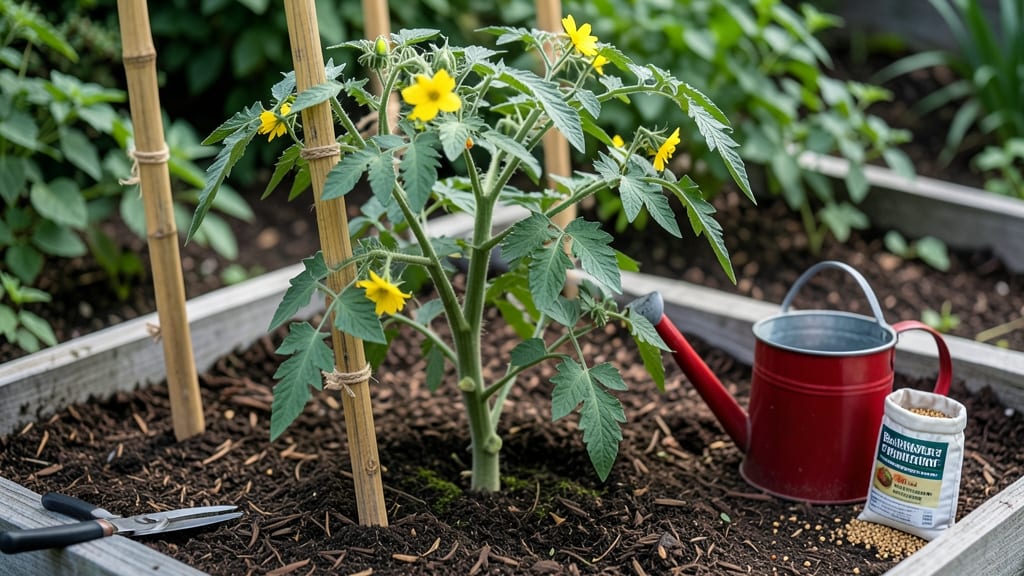
To get more tomatoes on your plant, you need to prune, feed, and train it like a fruit factory—not just a leafy bush.
Picture this: a six-foot vine sagging under the weight of dozens of ripe tomatoes, instead of the same handful you’ve been picking for weeks. The difference isn’t luck—it’s science-backed pruning, the right nutrients, and smart training.
I’ve tested these methods in Zone 6a, and they work whether you’re growing cherry tomatoes or beefsteaks.
Most gardeners stop at staking or fertilizing once, but the real yield boost comes from consistent pruning to redirect energy to fruit, targeted feeding during flowering, and training vines for maximum sunlight exposure. Skip any of these, and your plant will keep growing leaves instead of tomatoes.
Below, I’ll walk you through the exact steps—when to cut, what to feed, and how to train your 🍅 plant for a harvest that rivals the grocery store. No guesswork, just results.
Scientific pruning techniques to maximize tomato fruit production
If your tomato plants are putting all their energy into leafy growth instead of fruit, you're not alone. The key to overflowing tomato vines lies in scientific pruning techniques that redirect energy where it matters most—toward fruit production.
Unlike random snipping, strategic pruning increases airflow, reduces disease risk, and boosts yield by up to 30% in indeterminate varieties. Let’s dive into the step-by-step methods that work for both determinate (bush) and indeterminate (vining) tomatoes.
First, understand that tomato plants grow in two distinct patterns: determinate varieties stop growing once they hit a certain size, while indeterminate varieties keep growing and producing fruit all season. Your pruning approach should match your plant’s growth habit.
For indeterminate tomatoes (like 'Sungold' or 'Brandywine'), aggressive pruning maximizes fruit, while determinate types (like 'Roma') need minimal pruning to avoid stunting growth. The goal? Balance foliage and fruit to ensure every flower has the energy to develop into a tomato.
Before you grab your pruners, gather the right tools: sharp bypass pruners (for clean cuts), sterilized alcohol wipes (to prevent disease spread), and gardening gloves (to protect from thorns). Avoid dull tools—they crush stems, inviting infections.
Start pruning when your plant is 12-18 inches tall and continues throughout the growing season, focusing on suckers (the small shoots that form in the 'V' between the main stem and branches). These suckers compete for nutrients, so removing them early ensures your plant directs energy to existing fruit.
Step-by-Step Guide to Prune for Maximum Fruit
- 1 Identify Suckers: Look for small shoots growing in the 'V' between the main stem and branches. These are suckers—remove them when they're 1-2 inches long to prevent competition.
- 2 Prune Determinate Tomatoes: Minimal pruning—remove only yellow leaves or damaged foliage. These varieties produce fruit in clusters at the top; pruning too much reduces yield.
- 3 Prune Indeterminate Tomatoes: Remove suckers below the first flower cluster and lower leaves touching soil to improve airflow. Leave 3-4 main stems for support.
- 4 Thin Fruit Clusters: If a cluster has more than 3-4 tomatoes, remove the smallest ones. This ensures remaining fruit grows larger and healthier.
- 5 Prune for Airflow: Remove crowded branches and inner leaves to reduce humidity and prevent fungal diseases like blight. Aim for open, airy vines.
- 6 Clean Up Regularly: Prune every 1-2 weeks during peak growth (May-July) to maintain balance. Sterilize tools between cuts to avoid spreading disease.
One common mistake is pruning too aggressively, which stresses the plant. Indeterminate tomatoes, in particular, need at least 3-4 main stems to support continuous fruiting. If you prune down to just one stem, you’ll limit your harvest potential. Another pitfall? Pruning too late in the season.
Once temperatures drop below 50°F at night, your plant’s growth slows, and new cuts won’t yield much benefit. Focus on pruning during the active growing season (spring to early fall) for the best results.
For determinate tomatoes, pruning is minimal—just remove yellow or diseased leaves and any branches that rub against each other. These varieties produce fruit in one massive cluster at the top, so pruning too much can reduce your harvest.
Instead, focus on supporting the main stem with a cage or stake to prevent breakage under the weight of fruit. If you notice overcrowding in the plant, thin out some of the smaller branches to
Nutrient and water strategies for explosive tomato growth
To transform your tomato plants into fruit-producing powerhouses, focus on two critical factors: nutrient balance and consistent watering. Tomatoes are heavy feeders, demanding precise NPK ratios and micronutrients like calcium and magnesium to prevent issues like blossom-end rot while maximizing flower and fruit production.
The right approach ensures your plants don’t waste energy on foliage but instead channel it into heavy fruit set.
Start with a balanced fertilizer like a 10-20-10 NPK ratio during early growth, then switch to a high-phosphorus blend (5-10-10) once flowering begins. Phosphorus is the key to encouraging blooms, while potassium supports fruit development.
Pair this with organic boosters like compost tea or fish emulsion to provide micronutrients without overwhelming the plant.
| Nutrient Strategy | Key Benefit | DIY Recipe/Method |
|---|---|---|
| Balanced NPK (10-20-10) | Early growth & root development | Mix 1 tbsp 10-20-10 fertilizer with 1 gallon water; apply every 4 weeks |
| High-Phosphorus (5-10-10) | Boosts flowering & fruit set | Use 1 tbsp 5-10-10 fertilizer per plant during blooming season |
| Calcium (Epsom salt) | Prevents blossom-end rot | Dissolve 1 tbsp Epsom salt in 1 gallon water; spray foliage weekly |
| Magnesium (Compost tea) | Enhances chlorophyll production | Steep 1 cup compost in 5 gallons water for 24 hours; dilute 1:10 before use |
| Deep watering (1-1.5 gallons) | Prevents drought stress & rot | Water at soil level, early morning, every 2-3 days |
Watering is just as critical as fertilizing. Tomatoes thrive on deep, consistent moisture—never let them dry out completely, but avoid soggy soil, which invites fungal diseases.
Aim for 1-1.5 gallons per plant every 2-3 days, delivered at the soil level (not the leaves) to prevent blossom-end rot and leaf spot. Early morning watering minimizes evaporation and gives foliage time to dry before nightfall.
For an extra organic boost, try a DIY banana peel compost—rich in potassium—to support fruit development. Simply bury chopped banana peels around the base of your plant every 2 weeks.
Pair this with a weekly foliar spray of compost tea to deliver micronutrients directly to the leaves, where they’re absorbed quickly.
Monitor your plants closely for signs of nutrient deficiencies, like yellowing leaves (nitrogen deficiency) or weak stems (calcium deficiency). Adjust your feeding schedule accordingly, and always mulch heavily to retain moisture and regulate soil temperature.
With these strategies, your tomato plants will shift from leafy vines to fruit factories in no time.
💧