
Planting
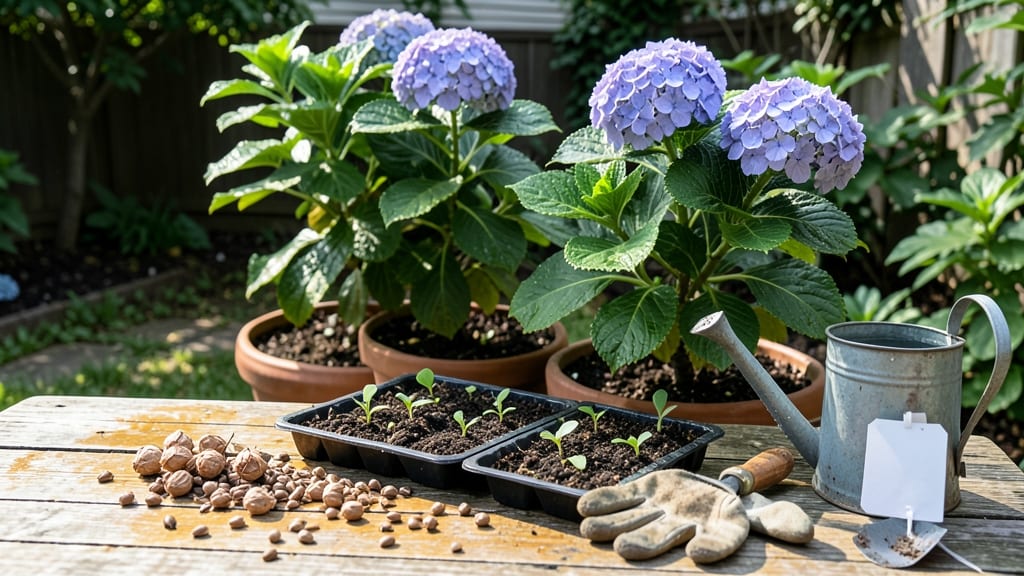
Growing hydrangeas from seeds or bulbs means year-round color that turns heads and fills your garden with lush blooms. 🌸 I’ve tried both methods, and while seeds take patience, bulbs deliver instant drama—though neither is perfect for every situation.
The choice depends on your timeline, space, and whether you want heirloom varieties or quick results.
Bulbs are the foolproof route for beginners: plant them in fall or early spring, and they’ll reward you with bold blooms within months. Seeds, on the other hand, require strategic timing—start indoors in late winter for a summer transplant, but expect to wait 2-3 years before seeing flowers.
Both need well-draining soil and morning sun with afternoon shade to prevent wilting.
Here’s the kicker: seed-grown hydrangeas develop hardier roots and unique color variations, while bulb varieties often bloom bigger and sooner. I’ve had my seed-started hydrangeas survive winters that killed my bulb plants—so climate matters too. For immediate impact, bulbs win. For long-term resilience, seeds are worth the wait.
Either way, you’ll end up with showstopping blooms—just adjust your expectations. Bulbs thrive in containers, while seeds need space to spread. Both require consistent moisture and light pruning after flowering. Let’s dive into which method fits your garden best!
The first product explained
Meet the Hydrangea macrophylla 'Endless Summer'—your ticket to nonstop blooms with minimal fuss! 🌸✨ This award-winning hydrangea is a fan favorite for gardeners who crave vibrant color without the seasonal limitations. Whether you're a beginner or a seasoned green thumb, this variety delivers reliable, show-stopping flowers year after year.
📏 Key Specs & Features
Here’s what makes this hydrangea a standout:
- Growth Habit: Bushy, compact shrub (3–5 ft tall, 3–5 ft wide) – perfect for borders, containers, or foundation plantings.
- Flower Color: Blue to pink (color shifts with soil pH—acidic = blue, alkaline = pink!). Blooms in late spring through fall (and sometimes into winter with mild climates!).
- Bloom Type: 'Remontant' – reblooms on new wood, so no deadheading needed for continuous color.
- Hardiness: Zones 4–9 – tough enough for cold winters and hot summers.
- Light Needs: Partial shade to full sun (afternoon shade in hot climates prevents leaf scorch).
- Soil Preference: Moist, well-draining, rich in organic matter (loves mulch!).
🎯 Who’s It For?
This hydrangea is a versatile powerhouse for:
- 🌿 Beginner Gardeners: Low-maintenance, forgiving, and hard to kill!
- 🏡 Homeowners: Adds curb appeal to patios, decks, or entryways.
- 🎨 DIY Landscapers: Mix-and-match colors by adjusting soil pH.
- 💐 Cut Flower Lovers: Large, long-lasting blooms perfect for bouquets.
- 🐝 Pollinator-Friendly Gardeners: Attracts bees and butterflies!
💰 Price Point & Value
Invest in long-term beauty with these options:
| Product Form | Approx. Price | Why It’s Worth It |
|---|---|---|
| 1-Gallon Potted Plant | $35–$50 | Instant gratification—ready to plant and bloom in the same season! |
| Bare-Root Plant (Dormant) | $25–$40 | Budget-friendly and easier to ship (plant in early spring). |
| Seeds (for Growing from Scratch) | $5–$15 (pack of 10+) | 💡 Pro Tip: Seeds take 2–3 years to mature—best for patient gardeners or bulk planting! |
Note: Prices vary by retailer (check local nurseries, Etsy, or Etsy for deals!). For fastest results, go with a potted or bare-root plant.
The second product explained
Meet Hydrangea macrophylla 'Endless Summer'—the ultimate choice for gardeners craving low-maintenance, big-bloom magic! 🌸✨ This award-winning hydrangea is a reblooming variety, meaning it delivers season-long color without fuss. Whether you're a beginner or a seasoned green thumb, this beauty is designed to thrive with minimal effort while packing a punch of vibrant blooms in shades of pink, blue, or purple.
🌿 Key Specs & Features
- Type: Hydrangea macrophylla (Bigleaf Hydrangea)
- Bloom Time: Spring through fall (reblooms annually)
- Mature Size: 3–5 ft tall, 3–6 ft wide (compact and bushy)
- Sunlight: Partial shade to full sun (adapts beautifully)
- Soil Preference: Well-draining, acidic to neutral (pH 5.5–7.0)
- Hardiness Zones: 4–9 (survives winters with ease)
- Color Range: Pink, blue, or purple (color shifts based on soil pH!)
- Growth Rate: Moderate (established quickly)
- Deer/Insect Resistance: Moderate (deer may nibble, but pests are rare)
🎯 Who’s It For?
This hydrangea is a dream for:
- Beginners: Thrives with basic care—no green thumb required!
- Small Gardens: Compact size fits containers, borders, or foundation plantings.
- Reblooming Fans: Unlike once-blooming varieties, this one keeps giving all season long.
- Color Experimenters: Adjust soil pH to shift blooms from pink to blue (fun science!)
- Low-Maintenance Gardeners: Drought-tolerant once established and pest-resistant.
💰 Price Point & Value
$29.99–$49.99 per plant (varies by retailer and pot size). While not the cheapest option, the long-term payoff is undeniable:
- Year-round color without replanting.
- Longevity (hydrangeas can live 10+ years with proper care!).
- Versatility—use in landscapes, cut flower arrangements, or even as a privacy screen.
Pro Tip: 💡 Buy from reputable nurseries (like Proven Winners or local garden centers) to ensure healthy, disease-free roots. Look for 1-gallon pots for the best balance of price and size!
Head-to-head comparison
Deciding between hydrangea seeds and bulbs can feel like choosing between planting a seedling and a fully grown tree—both have their perks! To help you make the best choice for your garden, we’ve broken down a side-by-side comparison across key dimensions.
Whether you’re dreaming of vibrant blooms next summer or planning a low-maintenance garden, this guide will help you weigh the pros and cons. 🌸✨
🌱 Growth Speed & Time to Bloom
If you’re eager to see hydrangeas in your garden ASAP, bulbs are the clear winner. Here’s why:
- Bulbs: Most hydrangea bulbs (like Hydrangea macrophylla or Hydrangea arborescens) sprout within weeks of planting and can bloom in the first year with proper care. Bigleaf hydrangeas, for example, may even reward you with flowers by late summer or fall.
- Seeds: Patience is key! Hydrangea seeds take 1-3 years to mature into flowering plants. You’ll likely spend the first year nurturing seedlings, and blooms may not appear until the second or third year. Some varieties, like Hydrangea paniculata, might surprise you sooner, but don’t expect instant gratification.
Pro Tip: 💡 If you’re growing hydrangeas from seeds, consider starting them indoors 6-8 weeks before the last frost to give them a head start. This can shave off a few months of waiting!
🌿 Bloom Abundance & Variety
Not all hydrangeas are created equal when it comes to flowers. Here’s how seeds and bulbs stack up:
| Factor | Bulbs | Seeds |
|---|---|---|
| Predictability | ⭐⭐⭐⭐⭐ – Bulbs deliver consistent blooms year after year, especially if the variety is well-established. | ⭐⭐ – Seeds may produce unpredictable flowers in terms of color, size, or even whether they bloom at all. Some seeds might revert to wild-type traits. |
| Color Options | ⭐⭐⭐⭐ – Nurseries offer named varieties (e.g., 'Endless Summer,' 'Nikko Blue') with guaranteed colors like pink, blue, or white. | ⭐⭐⭐ – Seeds are a gambling game for color. You might get a stunning surprise, but don’t expect the exact shade you’re dreaming of! |
| Size & Shape | ⭐⭐⭐⭐⭐ – Bulbs ensure full-sized, healthy blooms matching the plant’s description. | ⭐⭐ – Seedlings may produce smaller or irregular flowers until they mature. |
Pro Tip: 🎯 If you love experimenting, collect seeds from open-pollinated hydrangeas (like H. arborescens) for a chance at unique hybrids. Just don’t expect the same reliability as bulbs!
💰 Cost Comparison
Your wallet will thank you for knowing the price differences upfront:
- Bulbs:
- Single bulb: $5–$15 (depending on variety and rarity).
- Pack of 3–5 bulbs: $15–$30.
- Premium or heirloom varieties (e.g., H. macrophylla 'Blue Wave'): $20–$50+ per bulb.
- Seeds:
- Packet of 10–20 seeds: $2–$8.
- Organic or heirloom seeds: $5–$15.
- Rare or hybrid seeds: $10–$25 (but blooms may not match the parent plant!).
💡 Cost-Saving Tip: If you’re on a budget, seeds are the cheaper upfront option. However, if you want guaranteed blooms and don’t mind splurging, bulbs offer better value in the long run. Plus, you avoid the risk of seeds not germinating or producing flowers!
🌦️ Durability & Longevity
How long will your hydrangeas thrive? It depends on how you start them:
- Bulbs:
- Established bulbs can live for 10–20+ years with proper care.
- Resistant to disease and pests when planted correctly (e.g., in well-draining soil).
- Some varieties (like H. paniculata) are hardy in USDA zones 3–8, making them low-maintenance.
- Seeds:
- Seedlings may take 2–3 years to become fully established.
- More vulnerable to disease in their early years due to weaker root systems.
- Longevity depends on growing conditions—poor soil or neglect can stunt growth.
Pro Tip: 🌡️ To boost durability, mulch around bulbs or seedlings in winter to protect roots from freezing. Hydrangeas hate soggy soil, so ensure good drainage to prevent root rot!
🛠️ Ease of Planting & Maintenance
Let’s talk effort—because not everyone has a green thumb (and that’s okay!):
| Task | Bulbs | Seeds | ||||||||||||||
|---|---|---|---|---|---|---|---|---|---|---|---|---|---|---|---|---|
| Planting Difficulty | ⭐⭐ – Dig a hole, pop in the bulb, cover with soil. Simple and foolproof! | ⭐⭐⭐⭐ – Requires stratification (cold treatment) for some varieties, precise sowing depth (usually ¼ inch), and patience. | ||||||||||||||
| Watering Needs | ⭐⭐⭐ – Keep soil moist but not waterlogged for the first few weeks, then taper off. | ⭐⭐⭐⭐ – Seedlings need consistent moisture to prevent drying out. Overwatering can cause damping-off disease. | ||||||||||||||
| Fertilizing | ⭐⭐ – Use a balanced
Which one should you choose?So, you’re ready to bring vibrant hydrangeas into your garden—but should you go with seeds or bulbs? The choice depends on your goals, patience, and gardening style. Let’s break it down to help you decide with confidence! 🌸 ✨ Pick Seeds If...
🌿 Pick Bulbs If...
💡 Pro Tip for Hybrid ScenariosIf you’re torn, consider both! Start with bulbs for immediate impact, then sow seeds for future varieties or to fill gaps. It’s a win-win for year-round color planning. 📋 Final Checklist Before You Buy
Ready to dive in? Grab your gloves, pick your path, and get growing—your future garden (and your Instagram feed) will thank you! 🌈 |