
Planting
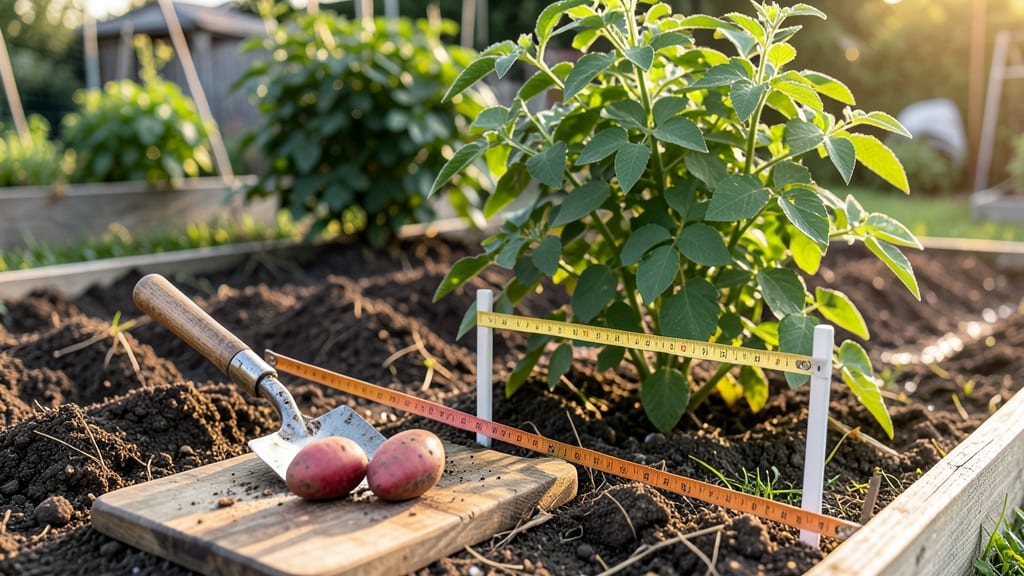
Planting red potatoes at the right distance—12 to 18 inches apart—is the key to avoiding stunted tubers and maximizing your harvest.
If you’ve ever dug up a patch of 🥔 only to find small, misshapen potatoes, you’re not alone. The issue isn’t just soil or water—it’s spacing. Too close, and plants compete for nutrients; too far, and you waste garden space.
But here’s the good news: with the right spacing, you can grow larger, healthier potatoes every season.
In this guide, I’ll break down the science behind spacing—whether you’re planting in rows, hills, or containers—and share proven hacks to boost tuber size. We’ll also cover how to adjust spacing for different soil types and companion plants that protect your crop.
Ready to transform your potato patch? By the end, you’ll know exactly how far apart to plant for a bountiful harvest, no guesswork required.
Optimal red potato spacing by variety and row type
Getting the red potato spacing right transforms your harvest from scrappy to spectacular. Unlike other crops, potatoes need room to develop large tubers without competing for nutrients.
The standard 12-18 inches apart guideline works for most varieties, but early, mid-season, and late red potatoes each have unique needs—especially when choosing between row planting vs. hills. Let’s break down the science so you can plan like a pro.
First, understand that soil depth matters just as much as spacing. Red potatoes grow best in loose, well-draining soil that’s at least 8-12 inches deep. If your soil is shallow or compacted, tubers will grow upward instead of outward, leading to misshapen or stunted potatoes.
For hills, aim for 12-18 inches of loose soil per planting spot, while rows should have 3 feet between them to allow easy access for hilling and harvesting.
Here’s where variety makes a difference. Early varieties like ‘Red Norland’ or ‘Yukon Gold’ (yes, some red-skinned types are early!) thrive with 12-15 inches apart in rows or hills.
Their faster growth means they won’t need as much space to reach maturity. Mid-season varieties such as ‘Kennebec’ or ‘Red LaSoda’ prefer 15-18 inches apart—this gives them room to bulk up tubers before harvest.
Late varieties like ‘Red Pontiac’ can handle 18 inches apart since they have more time to fill out.
Now, let’s talk about the row vs. hill debate. Rows are ideal for mechanized gardens or large-scale planting, while hills work better for small spaces or containers. In rows, space plants 12-18 inches apart with rows 3 feet apart.
For hills, mound soil into 12-inch-high pyramids and plant 3-4 seed potatoes per hill, spaced 12 inches apart in a triangle. Hills also make hilling easier—just add soil as vines grow to encourage deeper tuber formation.
🌱
For continuous harvests, try staggered planting. Plant early varieties first, then mid-season 2-3 weeks later, and late varieties another 2-3 weeks after that. This ensures you’re always harvesting something from June through September.
Just adjust spacing slightly—early varieties can be closer (12 inches), while late ones need full 18 inches to avoid competition.
Don’t overlook soil preparation. Before planting, mix in compost or aged manure to improve drainage and fertility. Red potatoes are heavy feeders, so avoid fresh manure, which can burn roots.
If your soil is sandy or rocky, add organic matter like peat moss to help retain moisture and nutrients. For clay-heavy soil, amend with coarse sand or perlite to prevent compaction.
Pro tip: Plant seed potatoes deeper in heavier soil (up to 6 inches) to encourage tubers to grow downward. In light, sandy soil, keep them shallower (3-4 inches) to prevent tubers from drying out. Always plant with the eyes facing upward—this ensures strong sprouting and faster emergence.
Finally, remember that spacing affects tuber size. Plants that are too close will produce smaller, more numerous potatoes, while those with ample space will yield fewer but larger tubers.
If you’re growing for storage potatoes, prioritize 18-inch spacing. For new potatoes or quick harvests, you can plant slightly closer (12-15 inches) and harvest earlier.
☀️
5 Proven spacing hacks to grow larger red potatoes
Red potatoes thrive when given the right space to spread their roots and develop large, healthy tubers. The key lies in balancing competition for nutrients with optimal soil coverage.
Traditional spacing often falls short because it doesn’t account for soil type or variety growth habits. Let’s dive into science-backed hacks that will transform your harvest from modest to magnificent.
Most gardeners follow the 12-inch rule for spacing red potatoes, but this can lead to stunted growth in dense soils or wasted space in loose soils. The secret? Adjusting spacing based on your soil type and using mounding techniques to encourage deeper tuber formation.
For example, clay soils need wider spacing (18-24 inches) to prevent waterlogging, while sandy soils can handle closer spacing (10-12 inches) with extra mulch.
- 1 Staggered Planting in Rows: Space red potatoes 12-15 inches apart in rows 3 feet apart. Plant every 2 weeks for continuous harvests and prevent overcrowding.
- 2 Hill Planting for Deeper Tubers: Plant 3-4 potatoes per hill, spacing hills 2 feet apart. Mound soil around stems every 2-3 weeks to encourage deeper root growth and larger tubers.
- 3 Companion Planting: Interplant with beans or peas (nitrogen fixers) to improve soil health. Space potatoes 15-18 inches apart when paired with companions to share nutrients without competing.
- 4 Watering Schedule: Water deeply once a week (1 inch) to encourage deep root growth. In sandy soils, water every 5-6 days to maintain moisture.
- 5 Soil Mounding: For clay soils, mound soil into ridges and plant potatoes on top. Space 18-24 inches apart to prevent waterlogging and improve drainage.
Modern spacing methods, like staggered planting, can increase yield by 20-30% compared to traditional single-planting. For example, planting red potatoes in double rows (two rows side by side) with 15-inch spacing between plants and 18-inch spacing between double rows maximizes sunlight exposure and air circulation, reducing disease risk.
Adjusting spacing for container gardening requires even more precision. Use 5-gallon pots for each potato, spacing them 12 inches apart in a grid. This ensures roots have room to expand without competing for nutrients. Always use well-draining soil and monitor moisture closely, as containers dry out faster than garden beds.
Finally, pay attention to variety-specific needs. Early varieties like Red Norland can handle closer spacing (10-12 inches), while late varieties like Kennebec need more room (15-18 inches) to develop larger tubers.
By tailoring your spacing to these factors, you’ll unlock the full potential of your red potato harvest.