
Planting
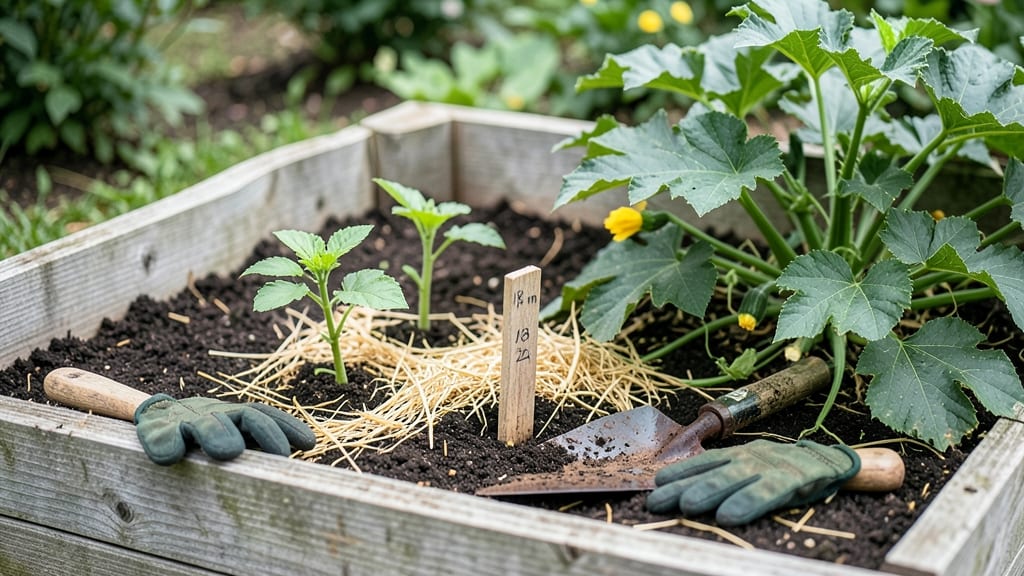
To plant zucchini in a raised bed, space them 18-24 inches apart for bush varieties—this keeps them healthy, maximizes yield, and prevents disease from overcrowding.
Struggling to fit the most zucchini 🎃 into your raised bed without sacrificing growth? Too little space means stunted plants and powdery mildew, while too much wastes precious square footage. The 18-24-inch rule balances airflow, sunlight, and root room, whether you’re growing compact 'Eight Ball' or standard 'Black Beauty.'
Raised beds change the game because their deep soil and controlled environment let zucchini spread wider than in-ground gardens. But even here, spacing matters—too close, and your harvest suffers; too far, and you’re leaving potential yield on the table.
Below, I’ll break down how to calculate spacing for your exact bed size, adjust for vining varieties, and pair zucchini with the best companions to make every inch count.
Optimal zucchini spacing in raised beds by variety and growth habit
Getting the zucchini spacing right in raised beds transforms your harvest from scrappy to spectacular. Unlike in-ground planting, raised beds offer controlled soil conditions, but spacing mistakes can still stifle growth or waste space.
The key? Understanding your zucchini’s growth habit—whether it’s a compact bush or sprawling vine—and matching it to your bed’s dimensions.
Bush varieties like 'Eight Ball' thrive with 18-24 inches between plants, while vining types such as 'Gold Rush' need 24-36 inches to sprawl without competing. Raised beds let you pack more plants per square foot, but cramming them too close invites powdery mildew and steals sunlight from the center.
Let’s break down the science—and the shortcuts—to get it perfect.
| Variety Type | Plant Spacing | Row Spacing | Raised Bed Fit (4x8 ft) | Companion Plants |
|---|---|---|---|---|
| Bush (e.g., 'Eight Ball') | 18-24" | 24" | 8 plants (2 rows) | Basil, marigold, nasturtium |
| Semi-Bush (e.g., 'Black Beauty') | 24-30" | 30" | 5 plants (1 row) | Radishes, lettuce, beans |
| Vining (e.g., 'Gold Rush') | 36" | 36" | 2 plants (1 row) | Cucumbers, peas, corn |
| Trellised Vining | 12-18" | 18" | 12 plants (2 rows) | Beans, radishes, lettuce |
For bush zucchini, the 18-24 inch spacing rule maximizes your raised bed’s potential. In a standard 4x8 ft bed, you can fit two rows of 'Eight Ball' with 24 inches between plants and rows.
This setup ensures air circulation to prevent mildew while keeping leaves from shading each other. Pro tip: Stagger plants in alternate rows to create a staggered grid, which improves light penetration and yield.
Vining varieties like 'Gold Rush' need more room—36 inches apart—but you can trellis them to reclaim space. When trellised, reduce spacing to 12-18 inches between plants, but install a 6-foot trellis along the bed’s length.
This vertical growth habit also makes harvesting easier and reduces fruit rot from ground contact. Just be sure to secure the trellis tightly; zucchini vines can weigh 50+ pounds when laden with fruit.
Raised beds with shorter widths (4x4 ft) require extra creativity. For bush zucchini, plant 4-5 plants per bed in a single row with 24 inch spacing, leaving the center for companion plants like basil or radishes.
Avoid planting zucchini in the corners; edge effects can stunt growth due to limited root space. Instead, center your plants and use the edges for shallow-rooted companions like lettuce or spinach.
Companion planting isn’t just about saving space—it’s about boosting health. Marigolds repel pests like squash bugs, while basil improves zucchini flavor and deters whiteflies. Avoid planting zucchini near potatoes or fennel, which stunt its growth.
In raised beds, interplant zucchini with fast-growing crops like radishes or green onions; these will mature before the zucchini spreads, maximizing your bed’s productivity throughout the season.
One common mistake is assuming all zucchini need the same spacing. Dwarf varieties like 'Patio Star' can be planted 12 inches apart in containers or small raised beds, but they’ll produce smaller fruit.
If you’re growing multiple varieties, group them by maturity date: Plant early varieties on one side of the bed and late varieties on the other to stagger harvests and avoid overcrowding.
Adjust your spacing if your raised bed has poor drainage or rich, fertile soil. In these cases, plants grow faster and need more room to avoid competition. Monitor your zucchini’s leaf canopy: If leaves touch between plants, it’s time to thin or harvest more aggressively. Overcrow
How to calculate zucchini spacing for your raised bed’s exact dimensions
Calculating zucchini spacing in your raised bed isn’t just about guessing—it’s about maximizing your harvest while preventing disease. A 4x8 ft raised bed can fit 4-6 zucchini plants perfectly when spaced correctly, but the math changes for 4x4 ft beds or trellised varieties.
Start by measuring your bed’s width and length, then divide by your chosen spacing (typically 18-24 inches for bush types).
For example, a 4x8 ft bed has 96 inches of length. Divide by 24 inches (spacing) to get 4 plants per row. Multiply by 2 rows (staggered) for a total of 8 plants—ideal for a family’s needs!
Use a string and stakes to mark rows before planting for precision. This method ensures even sunlight exposure and airflow, reducing fungal risks like powdery mildew.
| Raised Bed Size | Zucchini Spacing | Plants per Row | Total Plants (2 Rows) | Notes |
|---|---|---|---|---|
| 4x4 ft | 18 inches | 2 | 4 | Best for dwarf varieties |
| 4x8 ft | 24 inches | 4 | 8 | Ideal for standard bush types |
| 2x6 ft | 18 inches | 3 | 6 | Use trellis for vining types |
| 3x6 ft | 24 inches | 2 | 4 | Stagger rows for airflow |
Staggering rows is a game-changer for raised bed efficiency. Plant the second row halfway between the first row’s plants to create a diagonal pattern. This mimics nature’s spacing and prevents soil compaction.
For a 4x8 ft bed, place 4 plants in the first row at 24-inch intervals, then offset the second row by 12 inches. This method fits an extra plant while maintaining airflow and sunlight access.
Edge effects matter in raised beds—plants near the edges often grow faster due to warmer soil and more sunlight. To balance growth, place your largest or most vigorous plants (like ‘Black Beauty’ zucchini) along the edges.
Smaller varieties, such as ‘Eight Ball’, thrive in the center where competition for resources is lower. Always leave a 6-inch border around the bed’s perimeter for easy access and maintenance.
Need a quick reference? Download our free zucchini spacing template (link below) for common raised bed sizes. It includes grid layouts for 18-inch and 24-inch spacing, plus tips for trellising vining varieties.
Pro tip: Use a measuring tape with inch markers to avoid guesswork. Precision now means fewer pests and bigger harvests later!
🌱